The projects
I built these three projects for different parts of renting a car. The case study explains the research behind them.
Rove
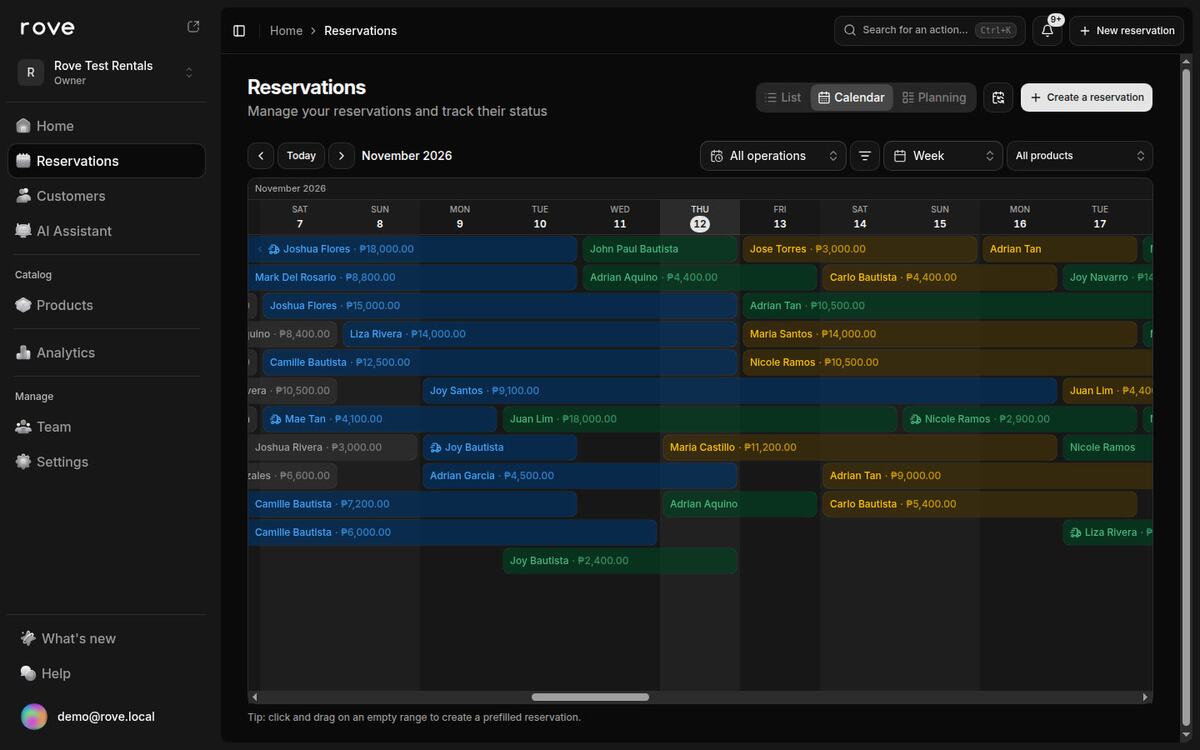
Customers choose dates and check available cars. The shop owner confirms each booking and manages it on one calendar.
Rentalk
A chat assistant that checks the shop’s rates and available dates. It can hold a car for the owner to confirm.
Shop website
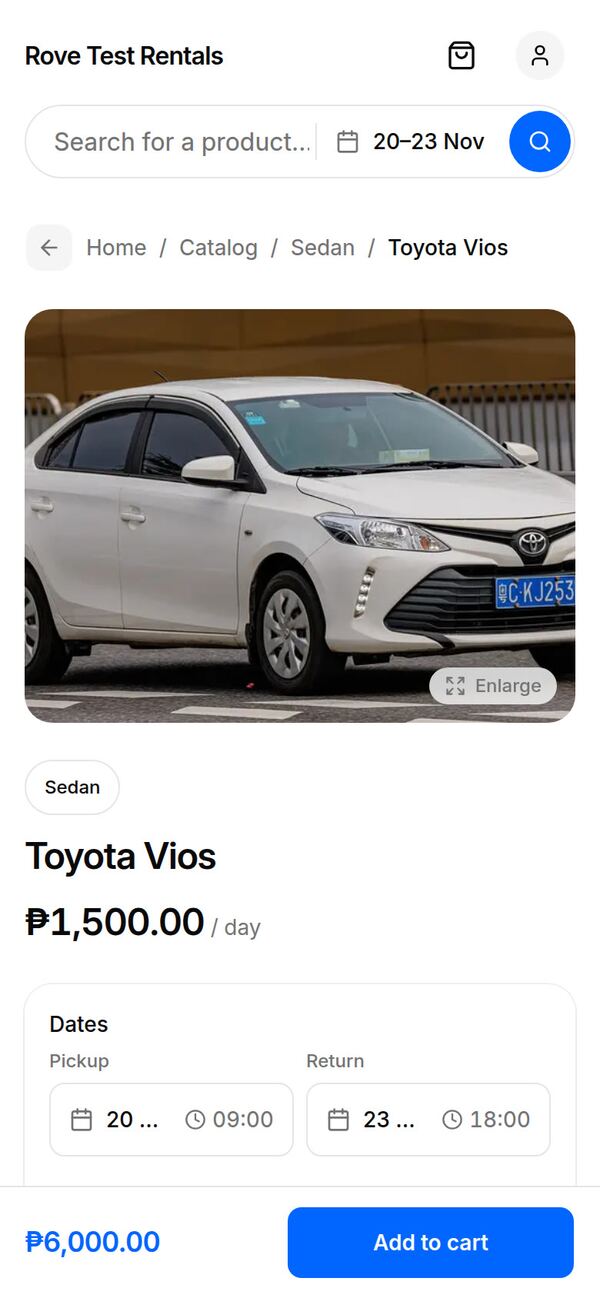
A one-page shop site with a search bar at the top. It lists each car and rate, explains booking and pick-up, and answers common questions.
Landing page explorations
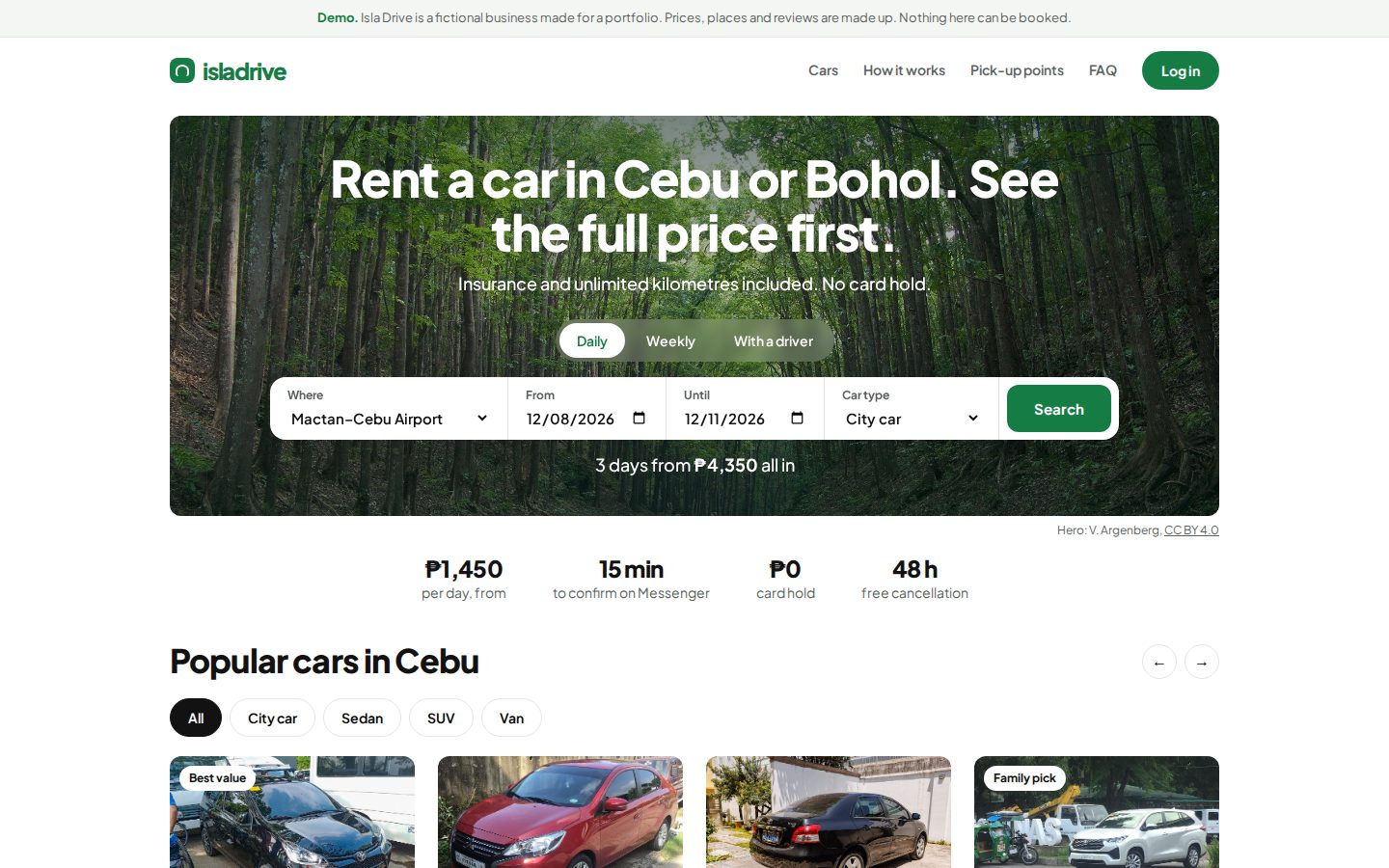
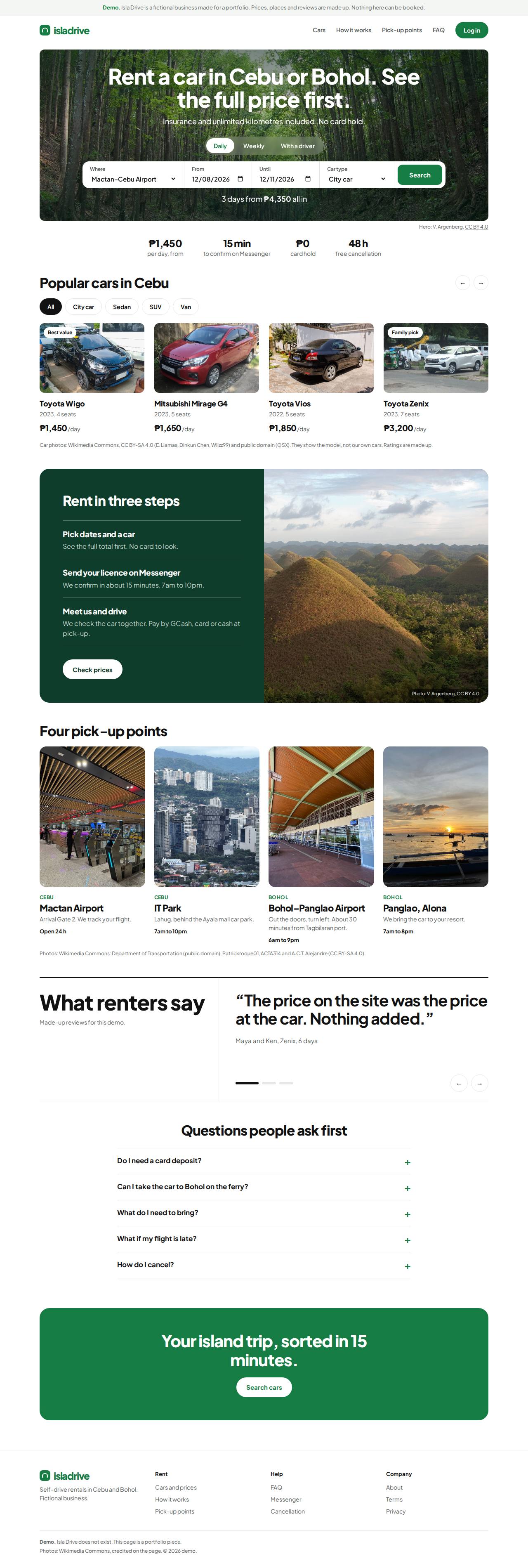
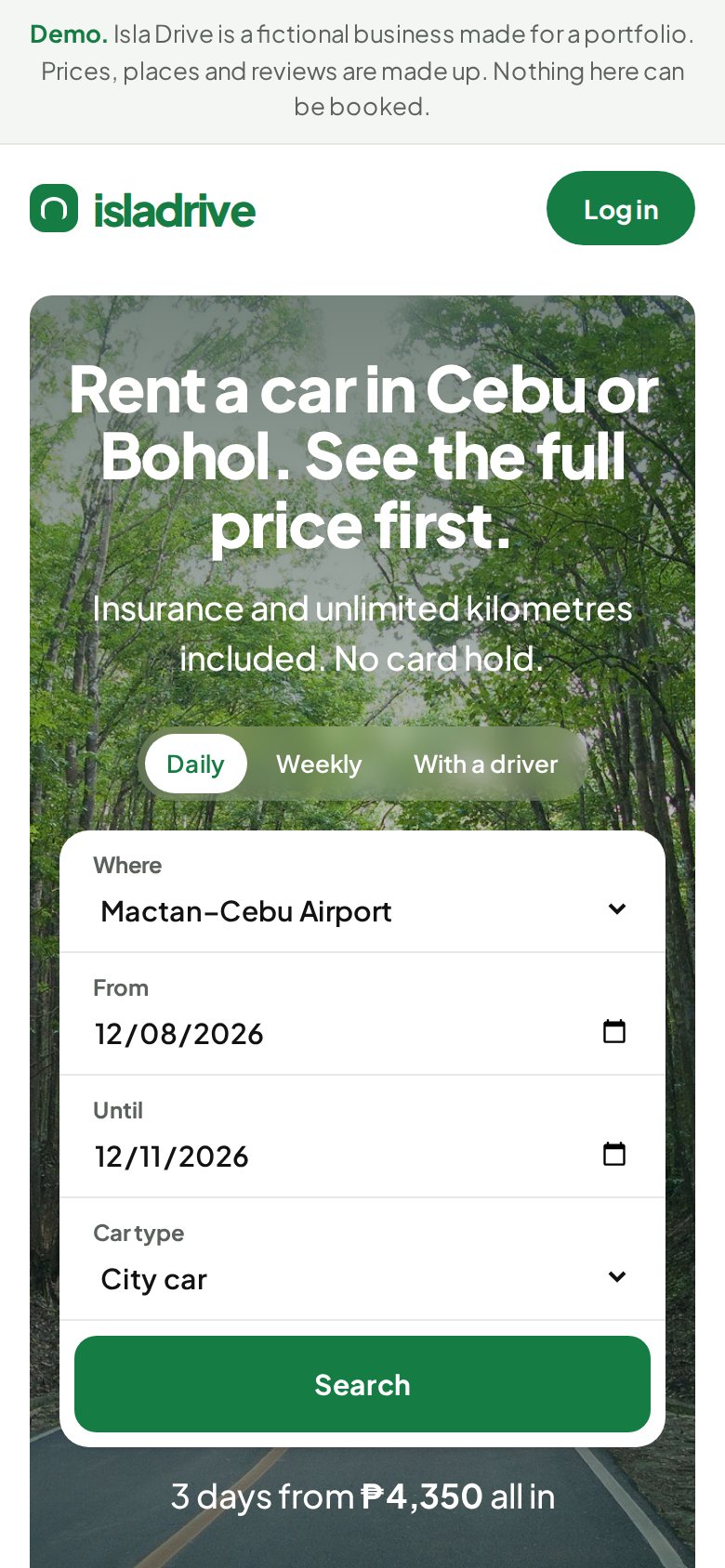
Isla Drive
A page in the style of Turo and Zoomcar. Customers start with a search bar, then browse car photos, three booking steps, pick-up points and an FAQ.
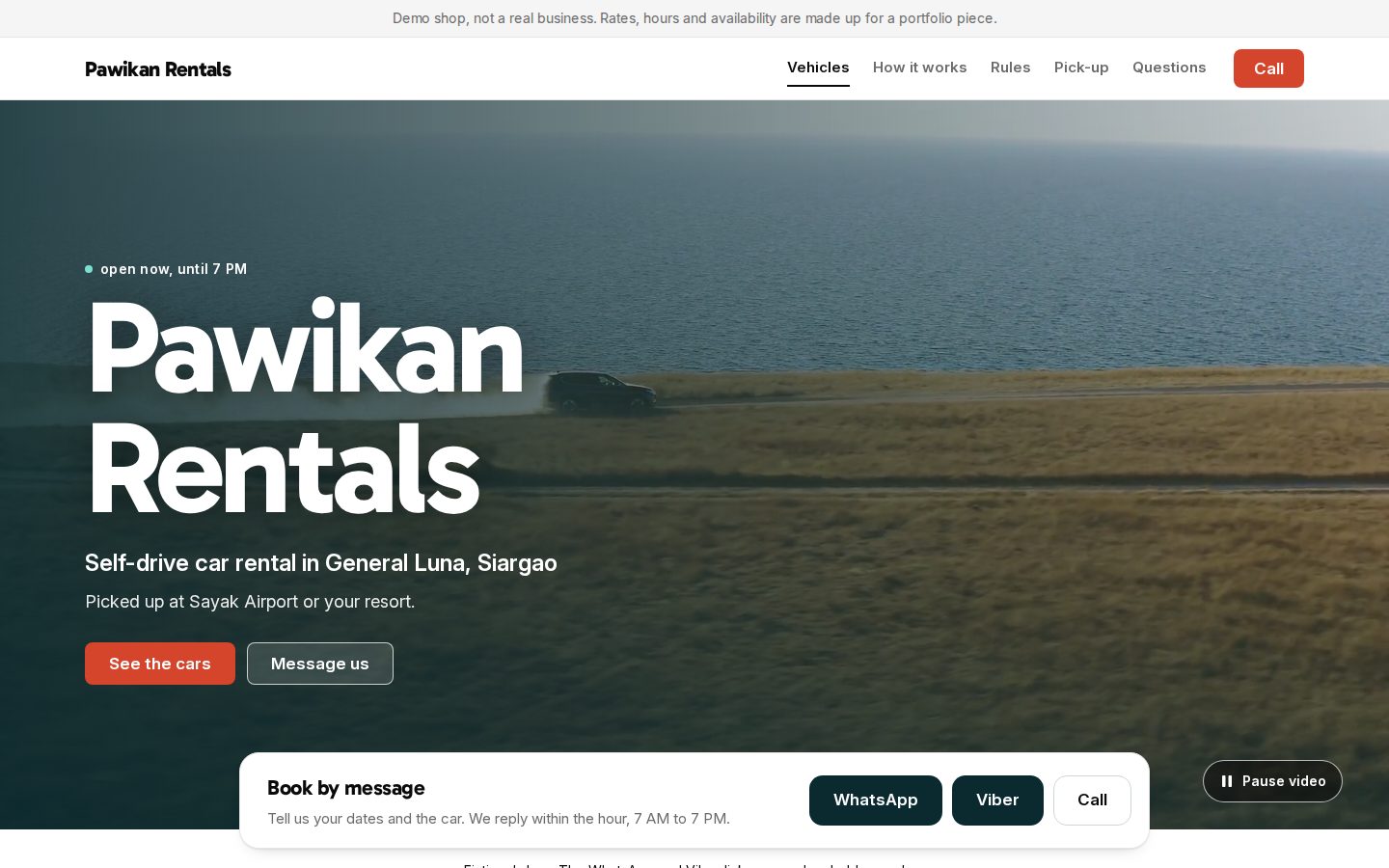
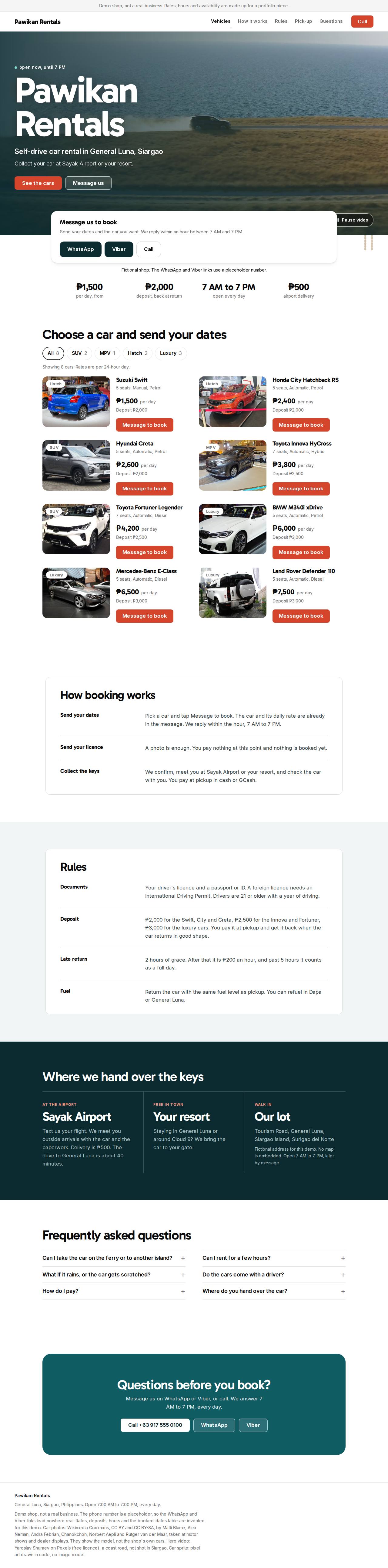
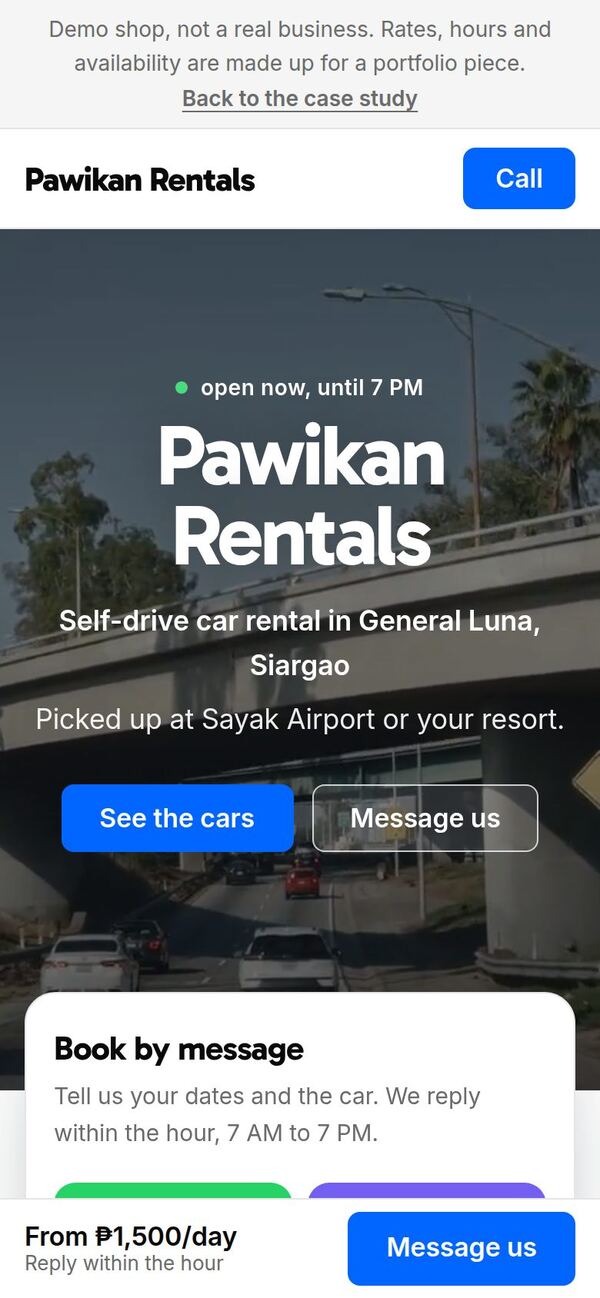
Pawikan Rentals
A full-width video introduces the shop. Each car has a WhatsApp button with its name and rate already filled in. A sample chat shows how booking works.
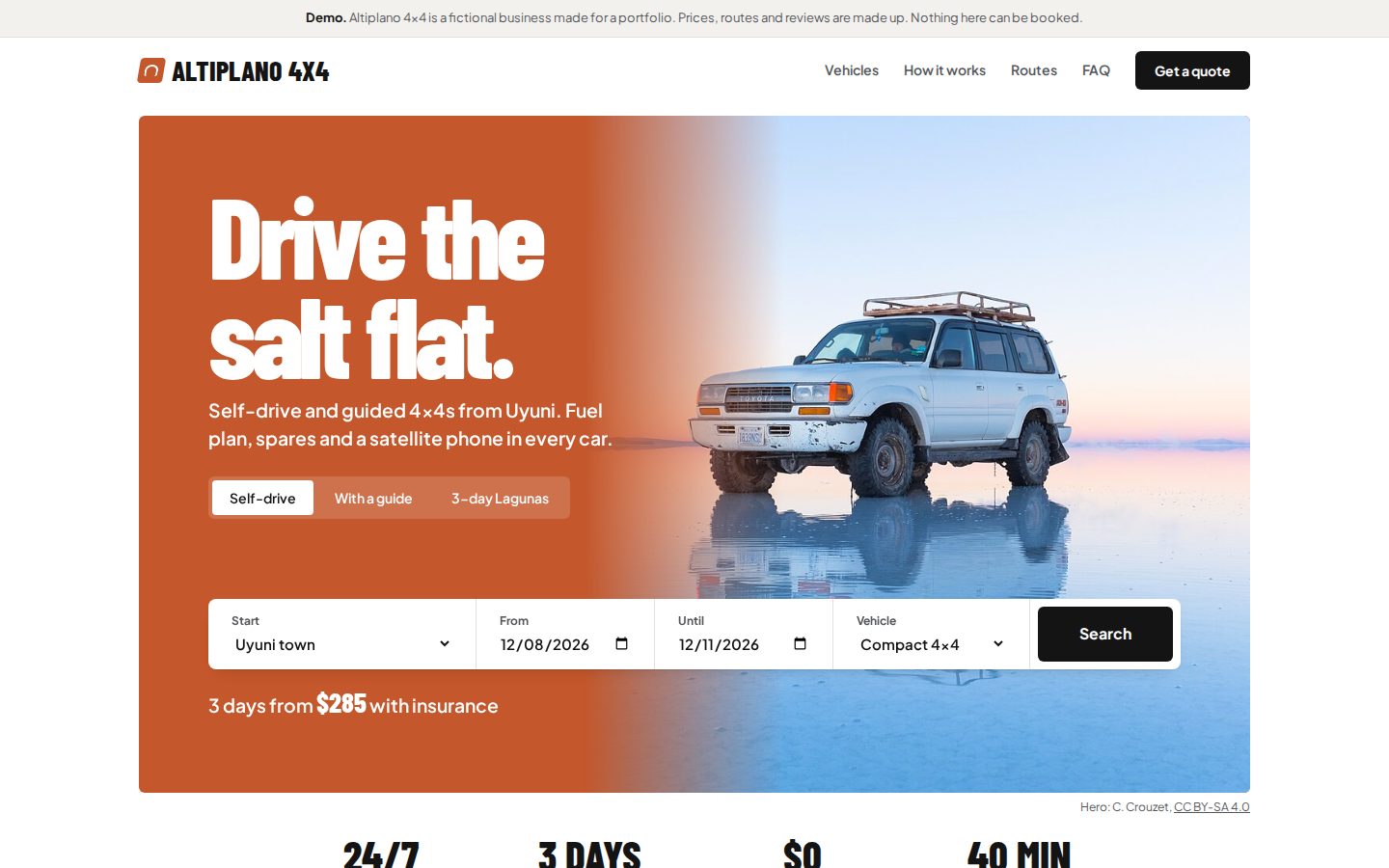
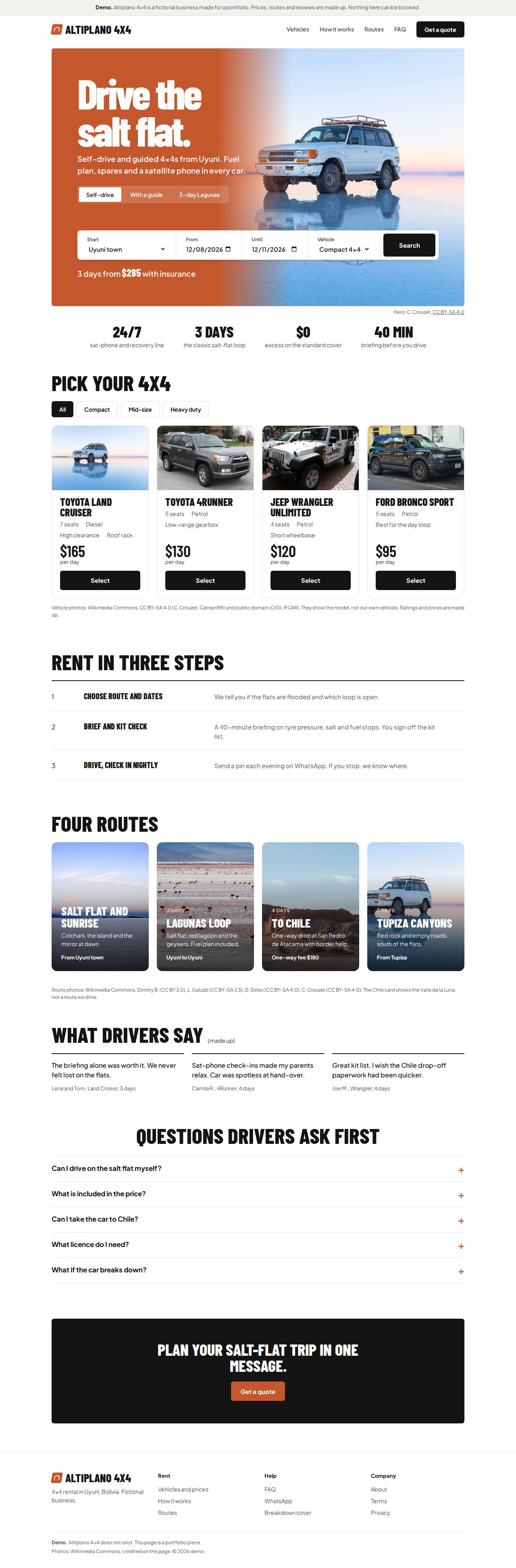
Altiplano 4x4
A salt-flat 4x4 rental page with large type and a wide layout. The vehicle sits against a block of colour, followed by a trip search and route photos.
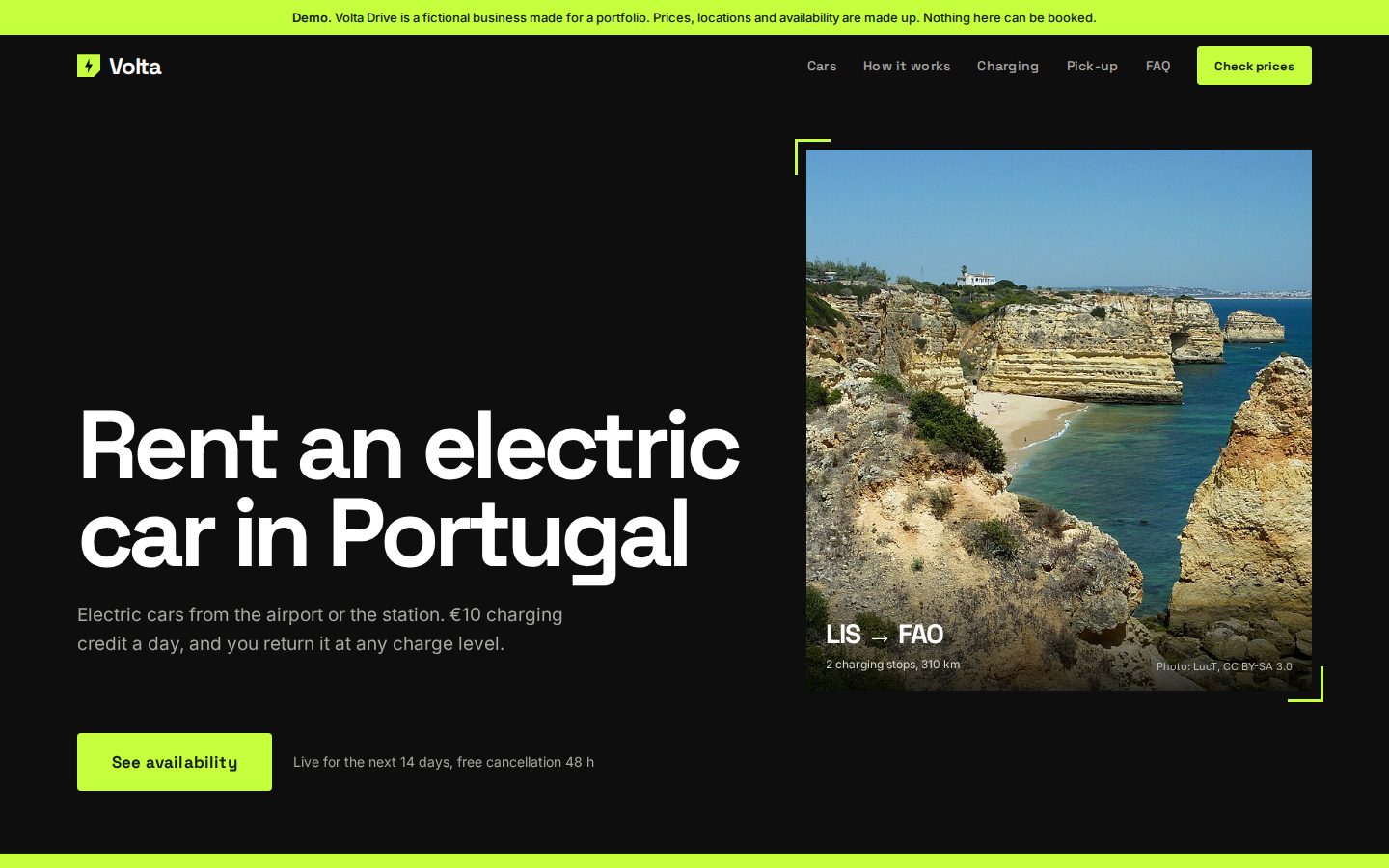
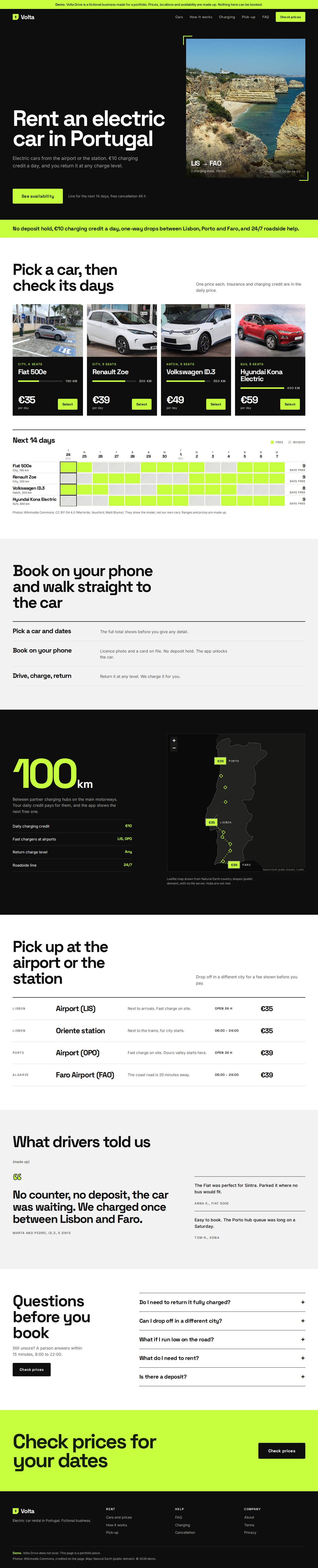
Volta Drive
An electric car rental page in charcoal and lime. Range bars help compare cars. A shared timeline shows 14 days of availability, and a Leaflet map shows charging locations.
Photos are from Wikimedia Commons and credited on each page.
Context
Small shops handle much of the self-drive rental business in the Philippines. Many have a few cars or vans and take inquiries through Facebook. Most are near tourist arrival points such as Cebu, Bohol, Palawan and Siargao.
Customers find a shop on Facebook or in a travel group and send a message. They then use chat to ask the price, arrange the deposit and agree on the handover.
Research
I started by reading shops’ published rates, rental rules and FAQs.
16 shops, 5 areas
I read rates and rules from shops in Cebu, Bohol, Palawan, Siargao and Metro Manila on 8 November 2026. I recorded the sources for each.
Six common vehicles
I compared 12-hour and 24-hour rates for the Vios, Mirage, Innova, Hiace, Click 125 and NMAX, along with each shop’s extra charges.
- Cars are priced per 24 hours. Only 3 of the shops publish a real 12-hour price.
- Deposits run from ₱1,000 to ₱5,000 depending on the area, and several shops don’t say what theirs is.
- Excess-hour rules differ from shop to shop: ₱200 an hour at one, ₱500 at another, a full extra day after 5 hours at a third.
- These details are hard to fit into a Facebook post. Owners end up explaining them again in chat.
Customer journey
These are the questions a customer asks from finding a shop to returning the car.
| Stage | Their question | Friction | What the design does |
|---|---|---|---|
| Finds the shop | Is this place legit? | A Facebook page with old posts and no rates. | A one-page site with every car, rate and rule. |
| Asks the price | Magkano for 3 days? | The owner replies when they can, sometimes hours later. | Rentalk answers with the real rate right away. |
| Asks the rules | May deposit? Need ba ng licence? | Different at every shop, and rarely written down. | Deposit and licence rules shown next to every car. |
| Books | Is the car free on my dates? | Bookings live in chats and a notebook. | Rove: customers pick dates and pay a reservation fee, the owner confirms, and it all lands on one calendar. |
Key insight
Customers ask about deposits and rental rules as well as prices. Most shops don’t have those rules written down.
Each project shows customers the prices and rules before they need to message the shop.
What I built
A website to find the details, a chat to ask questions, and a calendar to manage bookings.
Customers find you on Facebook, then ask for photos and rates of every car.
- Today
- Photos and prices sent one by one in Messenger.
- With this
- One link with every car and its rate, the total for your dates, how booking works, the deposit and requirements, and a Messenger button.
“Available ba?” “Magkano?” “May deposit?”
- Today
- The owner types answers to the same questions, often hours later.
- With this
- The chat checks the shop’s rate and available dates, then holds the car. The owner taps Confirm to approve the booking.
Is the Vios free on the 20th?
- Today
- The owner checks old chats and a notebook for availability, then follows up on deposits and paperwork.
- With this
- Customers pick their dates and see how many cars are free. They see the total and the deposit up front and send a request, and nothing is charged yet. The owner confirms it, and the booking shows on one calendar.
- Also
- Renters sign the contract on their booking link, and the car’s condition is recorded at pickup and return. The owner can add a driver, hold a car with a timed link, and see what each car earns. English or Filipino.
Demo data. Open it full size. Car photos: Wikimedia Commons credits.
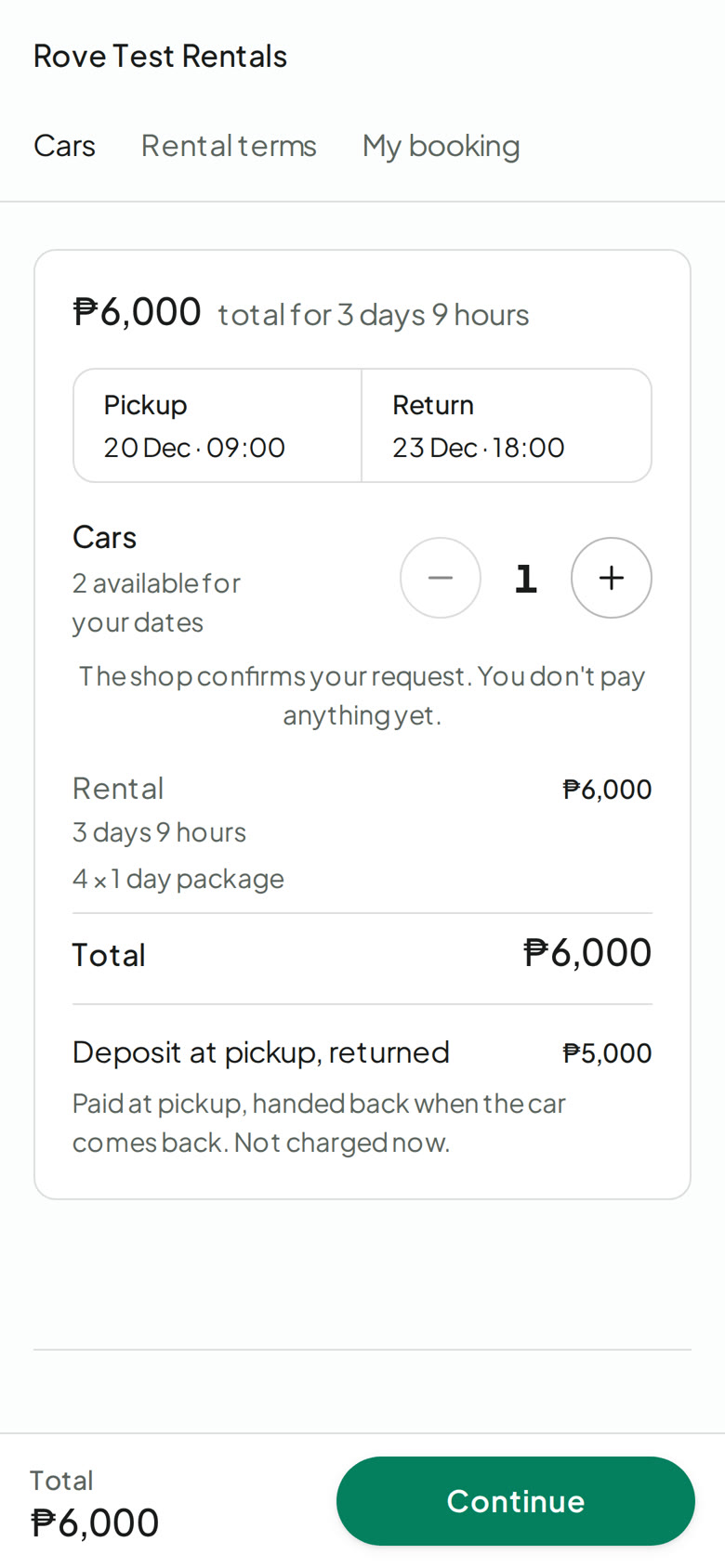
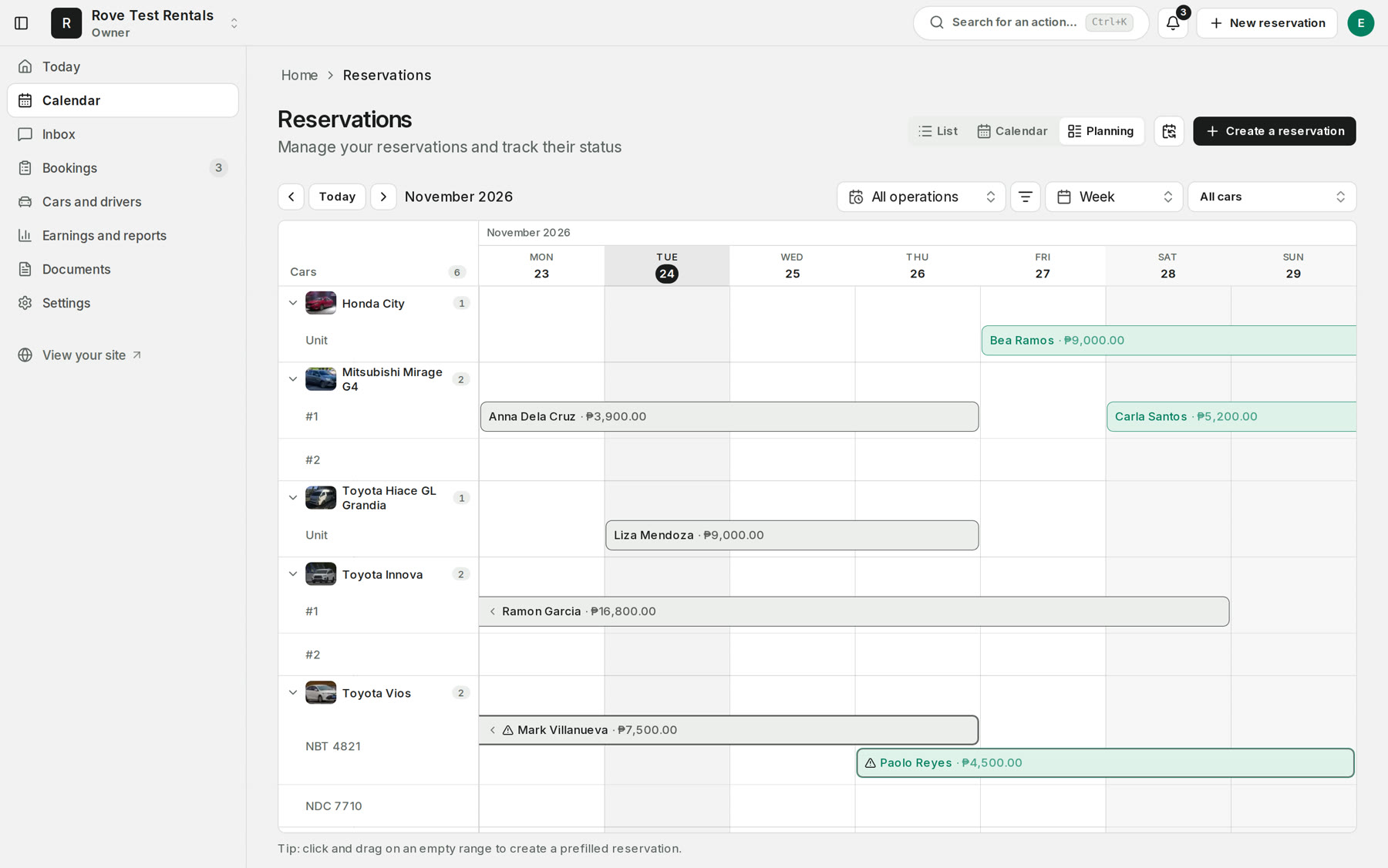
You can try Rentalk and Rove as working demos.
Major decisions
Where the chat gets its prices
- Chose
- Rentalk quotes rates and dates only from the shop’s own records.
- Over
- Letting the AI answer from what it thinks a car costs.
- Because
- Customers expect the quoted price. It needs to be a price the owner has set.
Instant booking or a request
- Chose
- Bookings are requests the shop confirms.
- Over
- Instant booking.
- Because
- A walk-in, an extended rental or a car in for PMS can change availability. The owner needs to check before confirming.
When to show the rules
- Chose
- Deposit and licence rules on every car, before checkout.
- Over
- Rules only at the end of booking.
- Because
- The research showed these are the questions every customer asks.
Where it stands
The demos work on a phone. No shop uses them yet, so I don’t have results from a real business to report.
I plan to bring Rentalk to Messenger and try Rove with a real shop. Rove already supports Filipino and payments through GCash, Maya and cards.
I’m Vince.
I’m looking for my first few rental shops to work with. The first one-page website is free.